How to Design Stickers If You’re Not Artistic: Beginner Tips
One of the most common things I hear from beginners is: "I want to make stickers, but I'm not artistic." If that's how you feel, I'm here to let you know: You don't need to be a trained artist (or anything near it) to design beautiful stickers.
Sticker making is about creativity, fun, and self-expression. It's not about being able to sketch portraits or paint watercolors. With the right tools and mindset, anyone can learn how to design stickers if you're not artistic.
Here are some simple, beginner-friendly tips to help you get started:
1. Remix ideas you already love
Not sure what to design? Look at things around you for inspiration and then remix them into your own version. For example:
- Love polka dots? Try adding them as backgrounds to shapes like hearts or circles.
- Inspired by floral prints? Use simple clip art flowers repeated in a pattern.
- Obsessed with stationery? Turn everyday objects like pens or paperclips into icons.
Taking something familiar and remixing it to give it your own twist is one of the easiest ways to start creating.
2. Focus on simple shapes
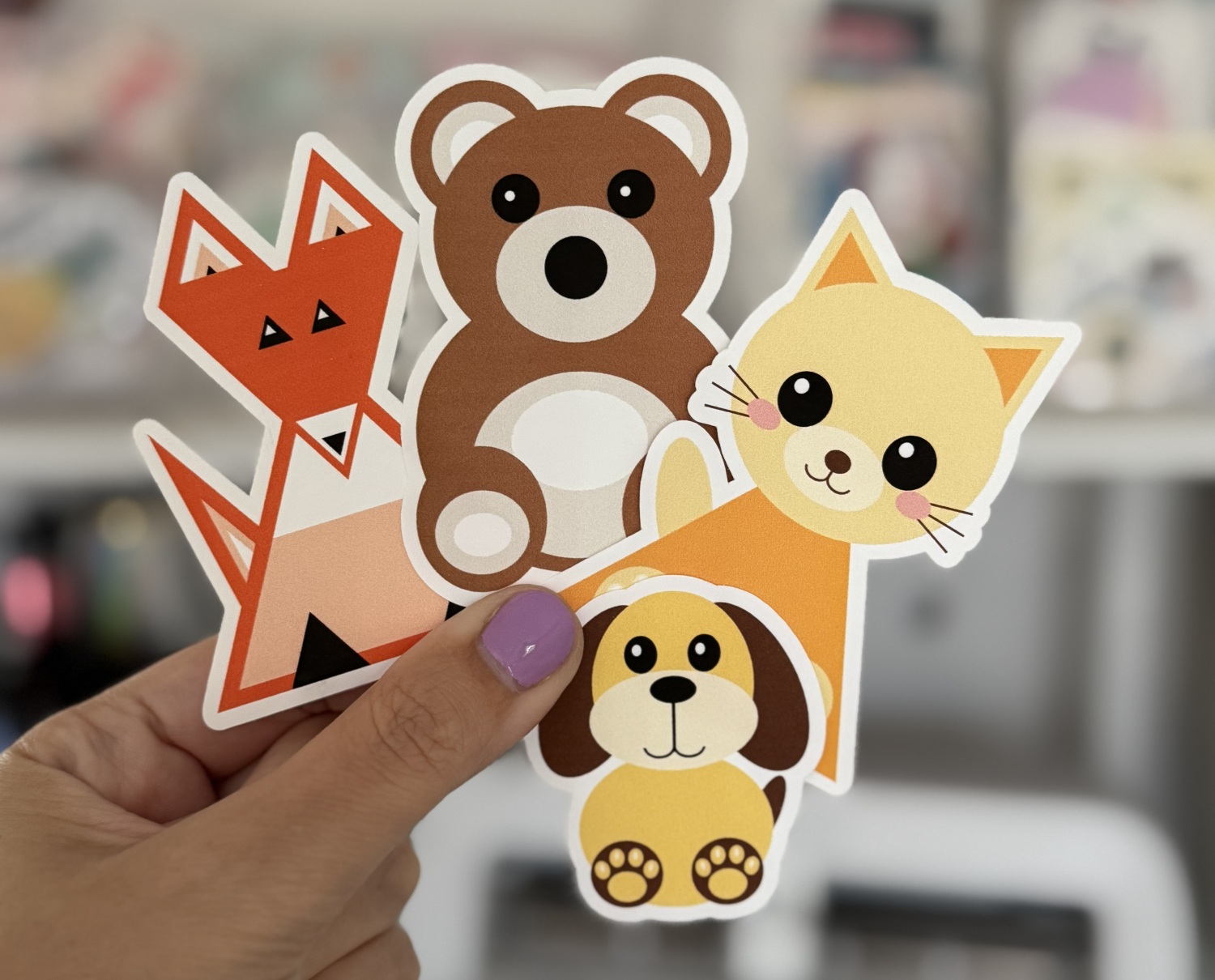
Complex artwork isn't required for effective stickers. In fact, some of the most popular designs are made from the simplest shapes.
Start with:
- Circles, squares, or rectangles for functional planner stickers
- Stars, hearts, or arrows for decorative touches
- Bold outlines and block colors instead of detailed shading.
Clean, minimal shapes are not only beginner-friendly but also highly versatile.
3. Use fonts to do the heavy lifting
You don't need to draw intricate designs when you can let typography shine. A well-chosen font can turn a simple sticker into something eye-catching and useful.
- Try bold, chunky fonts for headers like "To Do" or "This Week"
- Use script or handwritten fonts for decorative touches or quotes.
- Experiment with mixing two fonts (one simple, one decorative) for contrast.
Fonts allow you to add personality and flair to stickers without having to draw anything yourself. Creative Fabrica has great font options you can explore.
4. Start with sticker templates
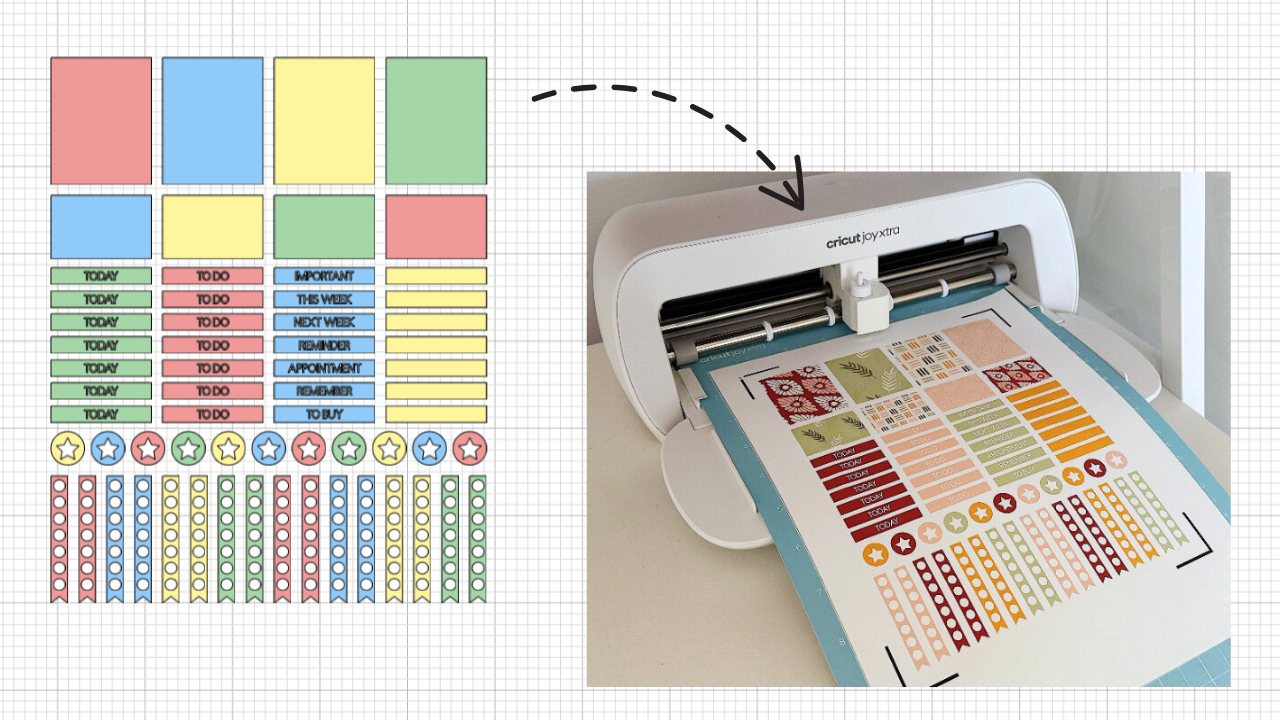
Templates are the ultimate beginner-friendly shortcut. Instead of starting with a blank page, you can begin with a ready-made shape or layout and customize it to make it your own.
- Change the colors to match your style or mood
- Add text in your favorite fonts
- Swap out clip art or patterns for ones that reflect your personality
Sticker templates take away the "scary blank page" problem and give you a structure to build from, which makes sticker design feel far less intimidating.
5. Rely on clip art and digital elements
Clip art, icons, and digital design elements are ready-made building blocks for your stickers. They give you polished shapes and images to work with, so you don't have to start from scratch.
- Search for themed clip art packs (like holidays, pets, or hobbies)
- Use simple icons (stars, checkmarks, or arrows) for functional stickers
- Combine different pieces into layouts or patterns to make them your own
With clip art, you're still designing—you're choosing, arranging, and styling pieces into a cohesive sticker sheet that reflects your taste. Creative Fabrica is an amazing place to look for clip art packs.
6. Build around everyday functionality
When inspiration is low, focus on stickers that solve everyday needs instead of trying to invent something new. Functional designs don't need to be artistic—they just need to work.
Some examples:
- Boxes to block out time in your planner for appointments
- Habit trackers or checklists
- Labels to organize your pantry
Functional stickers are always useful, and making them builds your design confidence (and technical sticker making skills) without requiring artistic skills.
7. Play with patterns and textures
Patterns and textures are an easy way to create visual interest without needing advanced art skills. Even simple repeats can look polished and professional.
- Use stripes, polka dots, or grids as backgrounds for shapes
- Try repeating one small icon (like a heart or star) to fill an entire sticker
- Add a faux texture effect (like watercolor, glitter, or kraft paper) to give depth without having to draw it yourself
Patterns are flexible. You can keep them subtle for planner stickers or bold for decorative sheets. They add variety to your designs without requiring complex illustration.
Want step-by-step help learning sticker design?
If you're ready to go from "I don't know where to start" to confidently creating stickers you love, then Sticker Making 101 is your next step.
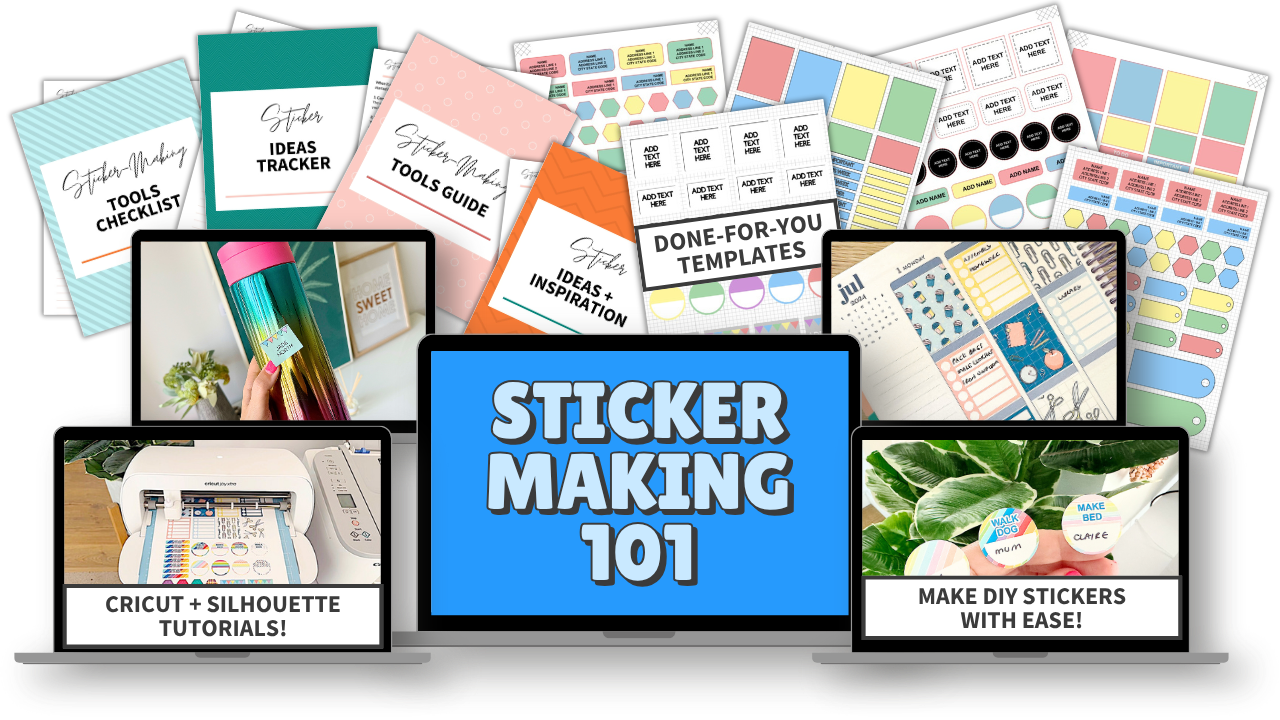
In this best-selling course, you get:
- A step-by-step roadmap to designing, printing, and cutting your first stickers
- Templates to help you start creating right away
- Guidance on choosing supplies, paper, and settings so nothing feels overwhelming
- Beginner-friendly lessons that build your skills and confidence quickly
By the end, you’ll know exactly how to design stickers if you’re not artistic—because you’ll have the tools and structure to make it simple.
Click here to join Sticker Making 101 today!
Sticker making is for everyone. Yes, even you.
If you've been telling yourself you're "not artistic", try reframing that into this: You're creative, and creativity looks different for everyone. You don't need to draw perfectly to make stickers you'll be proud of.
By starting simple, remixing ideas, and leaning on sticker templates, you'll quickly find your own style. And the more you practice, the more your confidence grows.
JOIN THE COMMUNITY:
Learn to make stickers from scratch that you're proud to use a share!